OSCP Certification
In today's post we are going to talk to you about one of the most recognized certifications in the world of information security. OSCP is a certification offered by Offensive Security and it is a certification in...
Today we cover one of the most respected certifications in information security. OSCP is a certification offered by Offensive Security and it is an offensive-security certification for professionals.
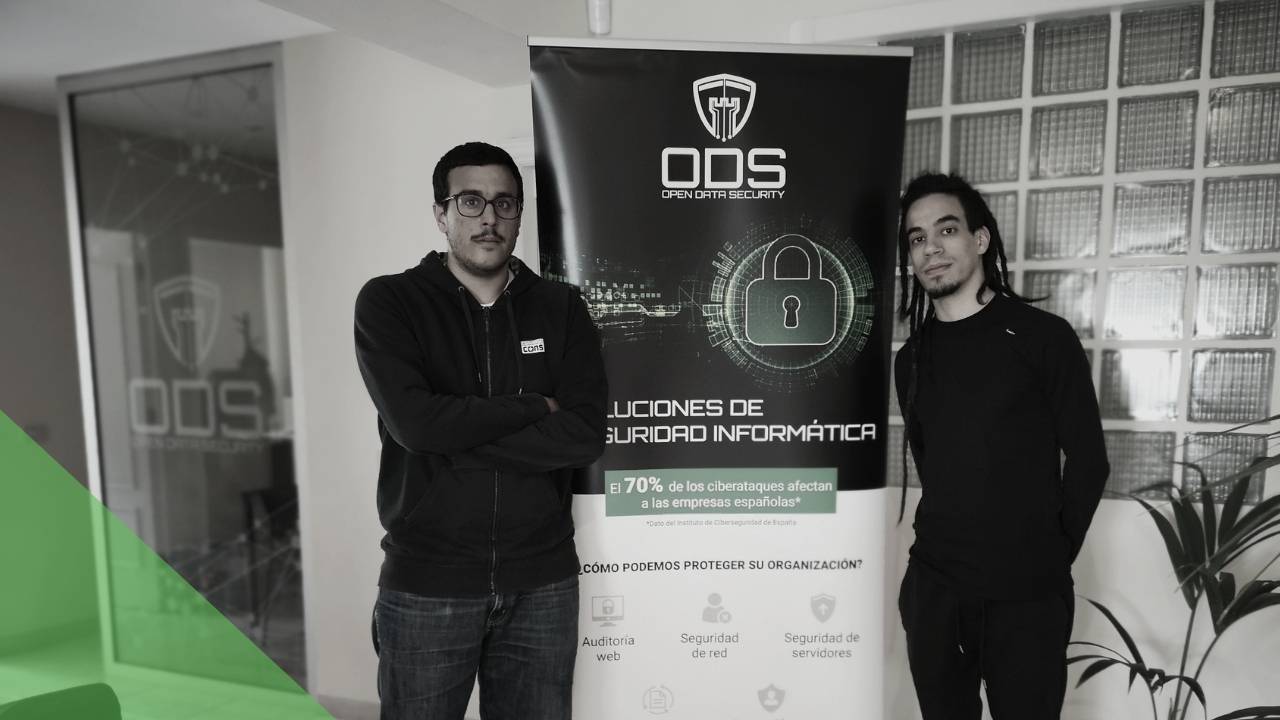
The piece includes interviews with ODS professionals Gonzalo Garcia and Efren Diaz, who recently earned the Offensive Security Certified Professional (OSCP) certification. They share first-hand experience and practical guidance for anyone considering the exam.
To complete the OSCP certification, what prior knowledge do you think is essential and/or necessary?
Gonzalo: This is a difficult and tough certification. Certainly, from an administrative point it is necessary to have in-depth knowledge about how the Linux and Windows operating systems work, how permissions work in each operating system, the file system, etc.
On the other hand, It is necessary to have at least basic knowledge of web vulnerabilities because a significant number of services are exploited through web vectors during lab work.
Other knowledge that helps during laboratory work and the exam is: knowledge of using databases such as exploit-db and knowledge of compiling binaries for Linux.
What do certification tests consist of? What type of tests are they?
Gonzalo: The OSCP certification consists of a laboratory accompanied by a course, called "PWK" (Pentesting With Kali), which covers the basic concepts necessary to begin to understand the pentesting process using the Kali Linux distribution.
The laboratory is made up of multiple machines, most of them server systems. The objective is to compromise those machines and obtain the highest privilege level on each one, using different techniques and exploiting different services.
Efren: It is also worth noting that the lab simulates a business network, with some subnets to which you will not have access at first, and to do so you will need to previously compromise some machines.
Another characteristic to take into account is that, just as when penetrating a company's network, an important factor is the data relationship between the machines. Sometimes certain details such as user names or others that you find on a machine after violating it, may be useful in the rest or even necessary to be able to compromise them.
What difficulties have you encountered when carrying out the tests?
Gonzalo: The greatest difficulty when carrying out a laboratory like OSCP is the organization of time, especially when you have to combine it with work. On the other hand, violating some machines in the laboratory is especially complex, since it involves chaining together several small vulnerabilities until maximum privilege is achieved on the machine.
Efren: Another factor to highlight is the presence of so-called "rabbit holes" in many machines. These are false trails in which you can waste a lot of time thinking that in them you will find the way to compromise the machine, and after hours of frustration you will realize that it was somewhere else, even after having previously seen it without realizing it.
How has your experience been with the laboratory?
Gonzalo: Very good, sometimes frustrating, but overall very good.
From your point of view, what benefits does certification offer you?
Gonzalo: For me, one of the main values ââthat certification teaches you is the well-known "Try harder." On many occasions, during a pentesting exercise, the objective may seem invulnerable, however, it is a matter of perseverance, organizing the information well and continuing and continuing to test ideas and techniques, until you find the key.
On the other hand, from an organizational point of view, OSCP teaches you how to correctly organize the pentesting process, from the recognition of services on the machine, through the exploitation of vulnerabilities to the elevation of privileges in the system.
Efren: Before starting the certification, your knowledge will always be stronger in the branches or types of technologies that you have worked on or encountered before. However, when you arrive at the laboratory you will have to understand and analyze new types of systems, protocols or characteristics that you have not seen before, which will provide you with a series of very important knowledge, and will help you strengthen and expand your field of knowledge.
How much time does certification require?
Gonzalo: The certification offers three plans that differ in the length of access to the laboratory. There are options for one, two or three months of access to the laboratory. Once the selected time has ended, it is possible to extend lab time for a somewhat reduced price or to take the exam. The more lab time you have, the less time you will have to spend daily, depending on your knowledge. It is normal to dedicate about 8 hours a week to the laboratory for an experienced person. A person without experience can dedicate between 3 and 4 hours a day, that is, on average about 17-18 hours a week.
Efren: Regarding the time to select for the laboratory, in principle for someone who does not have many years of experience in the computer security sector, it would be advisable to select the option of 3 months of laboratory time, dedicating a series of daily hours to it.
If you are one of those who has already worked in this field and believe you have robust knowledge in all branches of this sector, and, in addition, you can dedicate a few hours a day to the laboratory, you could select the two-month option. In my opinion, I would recommend the one-month option to those who have a considerable number of years in the sector, that is, those who have solid knowledge in all its parts and with enough time for the laboratory.
Once the certification is obtained, does it require renewal, that is, does it expire?
Gonzalo & Efren: No, once obtained, it does not require renewal.
Why do you think this certification is different from other certifications?
Gonzalo: OSCP is an eminently practical certification, you only pass if you have the necessary knowledge, if not, you will most likely fail. The "luck" factor plays a very secondary role.
Efren: We can also highlight that to add robustness and value to those who have the certification, since the end of 2018 it is one of the few certifications that when taking the exam requires you to have control of your webcam and monitoring of your screens to ensure that you are the one who takes the exam and you do not have any type of external help.
What recommendations would you give to people who want to become certified in OSCP?
Gonzalo: If you do not have any experience in pentesting, be patient and train yourself, it is important to reach OSCP with a minimum base. On the contrary, if they already have experience, they should embark on the adventure, even without obtaining certification, the laboratory experience is very valuable from a professional and personal point of view.
Efren: I recommend taking advantage of environments like "Hack the box" and "Vulnhub" to all those who want to get certified. Well, they offer a series of machines, many of them with characteristics similar to those of the OSCP laboratory, to be able to practice and thus arrive at it with a more solid base.
The OSCP certification is definitely one of the most prominent today. At ODS, 2 of our professionals are already certified and another colleague is in the process of completing the certification.
It is important to highlight that OSCP certification adds invaluable value to the development of a business, since having certified people offers greater knowledge, control, preparation and agility in responses.
At ODS we offer training based on preparation courses for all those interested in obtaining the OSCP certificate. Our team of certified experts will guide you throughout the entire test preparation process, providing you with the support and knowledge necessary to successfully obtain the OSCP certification.
Need Help Applying This?
If this topic relates to your environment, we can scope the right engagement model and provide a clear plan with evidence-focused outcomes.